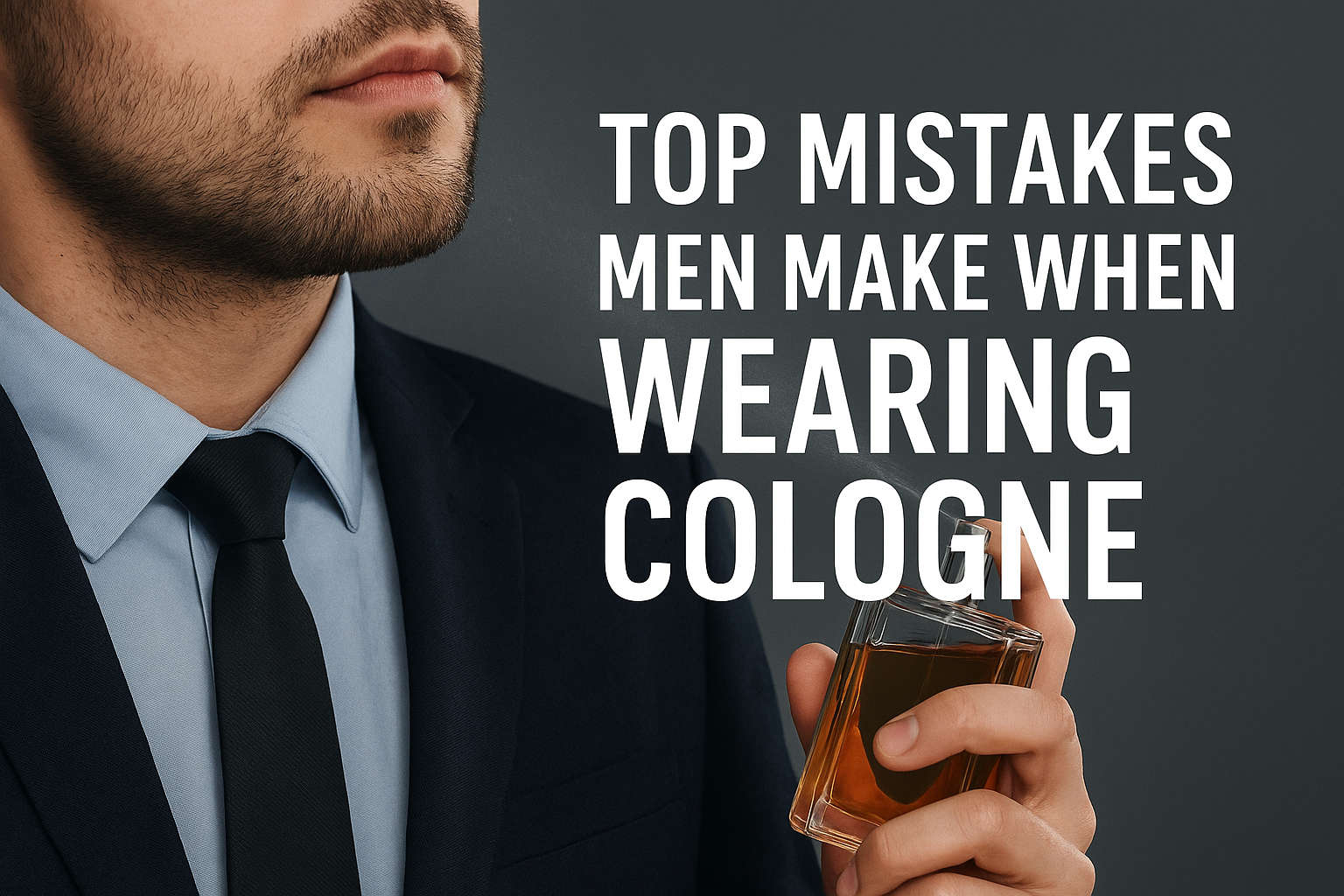
Cologne has the power to change the way people remember you. A refined, well-chosen scent can elevate your image, reinforce your personality, and leave a subtle trail of confidence wherever you go. But even the world’s finest fragrance falls flat if it’s applied incorrectly. The truth is that most men think they know how to wear cologne, yet a surprisingly high number get the fundamentals wrong—sometimes in ways that completely ruin the scent they paid good money for.
Understanding fragrance isn’t complicated once you know the principles. It’s a blend of chemistry, timing, technique, and personal awareness. Once you learn what to do—and what to avoid—you’ll not only smell better, you’ll get more longevity out of your bottles, attract more genuine compliments, and develop an intentional scent identity that suits you and the environments you move through.
This guide breaks down the most common mistakes men make when wearing cologne and shows you how to fix each one with confidence. Whether you’re just getting into fragrances or refining a long-term collection, these insights will upgrade your scent game immediately.
1. Wearing Too Much Cologne: The Silent Dealbreaker
The number-one fragrance mistake men make is simple yet surprisingly common: wearing far too much. Many men assume that intensity equals attractiveness, but in reality, over-spraying can instantly turn a pleasant scent into an intrusive cloud.
A well-worn fragrance should invite someone closer. It shouldn’t announce itself thirty feet away or linger in an elevator after you’ve stepped out. If people can smell you before they see you—or worse, if they react physically with squints or coughs—you’ve crossed into “too much” territory.
Sometimes men over-spray because they stop noticing their own fragrance after a few minutes. This isn’t because the cologne faded; it’s because your brain adapts to familiar scents. Others do it because they suffer from “fragrance anxiety,” worrying no one will notice unless they practically soak their shirts. But great cologne doesn’t need more sprays to perform well; it just needs the right amount in the right places.
If you find yourself tempted to keep adding layers, pause and trust the fragrance to do its job. A few deliberate sprays—even just one or two with a stronger perfume concentration—will project far more beautifully than a fog of excess scent.
2. Rubbing Fragrance Into the Skin and Ruining the Composition
It’s one of the classic rookie mistakes: spray on the wrists, then rub them together, or rub your wrists against your neck. It seems harmless, almost like “activating” the fragrance. Unfortunately, rubbing doesn’t activate anything—it actually damages the molecular structure of the scent, forcing it to evaporate faster.
Fragrances are carefully engineered with layers called notes: the bright top, the richer heart, and the deep base. Rubbing distorts this natural progression by breaking down the top notes prematurely. Instead of experiencing the fragrance’s true evolution, you end up wearing a flattened version that doesn’t last as long and doesn’t smell the way the perfumer intended.
The best way to apply cologne is surprisingly simple: spray it on the skin and let it dry naturally. No rubbing, no tapping, no smearing. Just let it settle. A quality fragrance is designed to unfold on its own.
3. Spraying Only Clothing and Ignoring the Skin’s Chemistry
Some men avoid spraying cologne on their skin entirely, aiming only for their shirts or jackets. While clothing can hold scent well, fabric doesn’t allow the fragrance to develop or breathe the same way skin does. The result is often a sharper, more synthetic version of the scent.
Human skin has warmth, natural oils, and chemistry that help fragrance evolve from fresh opening notes to deeper, more complex tones. When applied to clothing alone, the scent loses these transitions. It also risks staining delicate fabrics or clinging stubbornly to garments in ways you may not want.
Clothing application isn’t inherently wrong—it can be useful for extending longevity when done sparingly—but it should complement skin application, not replace it. Use skin as the primary canvas, and if you want a boost, lightly mist areas like the back of a jacket or the collar of a coat. Let your skin be the main storyteller.
4. Choosing Scents That Don’t Match the Occasion
Fragrances create atmospheres. They set the tone before you even speak. Yet many men choose scents based solely on personal preference, not considering whether it fits the setting.
A heavy, smoky winter fragrance worn in a hot conference room will suffocate everyone around you. A breezy aquatic scent worn on a romantic evening may smell too casual or forgettable. Wearing a bold clubbing scent in a professional office may give off the wrong impression entirely.
Scents align with mood, environment, and purpose. Fresh, clean fragrance families often shine during the day; rich, sensual scents perform better at night. Formal settings demand more understated refinement, while relaxed or adventurous environments allow playful experimentation.
When you match your fragrance to the moment, people notice—not because it’s loud, but because it feels appropriate, intentional, and effortlessly attractive.
5. Applying Cologne Only Once and Expecting It to Last All Day
Even if a fragrance smells wonderful in the morning, it may not last until evening. Many men believe a single application should carry them from dawn to night, but fragrance simply doesn’t work that way.
Heat, humidity, dry skin, and even the type of fragrance concentration influence longevity. Lighter, citrus-based scents fade more quickly, while richer perfume concentrations can last significantly longer.
Refreshing your application is completely normal and often necessary, especially if the scent is subtle or your day is long. Carrying a travel-sized atomizer makes this effortless. A quick, well-placed touch-up—never excessive—restores presence without overwhelming anyone.
Men who learn the rhythm of their fragrance’s performance enjoy far more reliable and refined scent experiences.
6. Spraying Cologne on Random Body Areas Instead of Proper Pulse Points
Pulses points matter because they help a fragrance project naturally. These areas emit subtle heat that allows the scent to rise off the skin throughout the day. Yet many men spray cologne on less effective areas such as the chest, stomach, or even hair—without realizing how it affects performance.
The most effective locations are the neck (particularly the sides), behind the ears, inner elbows, and wrists. These zones create a soft halo of scent that’s noticeable without being aggressive.
Spraying hair, though sometimes recommended in casual tips online, is usually counterproductive because the alcohol in cologne can dry out strands. Spraying directly on clothing often leads to uneven development and potential fabric discoloration.
Think of your pulse points as natural amplifiers. When you choose the right spots, even a modest application radiates beautifully.
7. Ignoring Your Skin Chemistry and Wondering Why the Scent Smells “Off”
Fragrances never smell identical on two people because skin chemistry changes everything. Body temperature, natural oils, hydration, pH levels, and even diet influence how a cologne opens, evolves, and settles.
This is why a fragrance that smells incredible on a friend might smell bland or overly sharp on you. It’s also why some fragrances fade rapidly on certain skin types while lingering for hours on others.
Understanding your skin chemistry is the key to choosing scents that truly work for you. Test potential fragrances on your skin—not just paper strips—and wear them for several hours. Pay attention to how they change through the top, heart, and base notes. You’re not looking for instant perfection; you’re looking for a scent that becomes increasingly enjoyable as it dries down.
The more you learn about how your skin behaves, the easier it becomes to build a fragrance wardrobe that always performs beautifully.
8. Relying on a Single Signature Scent for Every Situation
The idea of a “signature scent” can be romantic. Many men imagine becoming known for one unmistakable fragrance—a personal calling card that people immediately associate with them. While that’s appealing, relying on a single fragrance for every season, event, temperature, and mood is limiting.
Different situations call for different energies. A crisp summer scent won’t perform well in cold weather; its light freshness gets swallowed by the chill. Meanwhile, a dense winter fragrance may feel suffocating in heat. Professional settings often require discretion, while social events allow more expressive choices.
A well-rounded scent wardrobe doesn’t need to be huge. Even owning just a few fragrances—a fresh daytime scent, a warm evening scent, a bold night-out scent, and a refined formal scent—offers far more versatility than a single bottle can.
Variety allows you to shape your identity intentionally, adjusting your scent the way you’d choose clothing for the weather.
9. Storing Fragrances in Hot, Bright, or Humid Environments
Fragrances are delicate. Their integrity can easily degrade if they’re exposed to sunlight, heat, or humidity. Many men unknowingly shorten the life of their cologne by storing bottles on a bathroom counter, near windows, or in cars.
The bathroom may seem like a natural place to keep cologne, but steam and temperature changes break down the aromatic compounds over time. Exposure to sunlight can cause oxidation, turning vibrant fragrances dull or sour.
Fragrances thrive in stable, cool, dark environments. Keeping them in their original boxes or a dedicated shelf away from direct light can preserve their quality for years. Treat your fragrances the way you’d treat a good bottle of wine: with care, consistency, and the right conditions.
10. Settling for Cheap Replicas Instead of Quality Fragrances
There’s nothing wrong with affordability; many reasonably priced fragrances smell fantastic and perform well. But low-quality knockoffs or suspiciously cheap imitations often deliver harsh, shallow, or alcohol-heavy scents that disappear quickly or smell chemical.
Good fragrances rely on quality ingredients and balanced composition. Cheap replicas may mimic the top notes, but they lack the depth, smoothness, and longevity of well-made originals. They also tend to fall apart on skin chemistry or smell different as soon as they settle.
If budget is a concern, the solution isn’t to buy low-quality copies—it’s to explore brands known for value, or start with smaller bottle sizes. A 30ml bottle of a good fragrance often outperforms a large bottle of something poorly made.
Investing in quality ensures your scent reflects sophistication, not shortcuts.
11. Ignoring Seasonal and Weather Effects on Fragrance Performance
Fragrances interact with the weather in significant ways. Heat intensifies scent projection, often making sweet or spicy fragrances feel overpowering. Cold temperatures suppress lighter scents, causing them to disappear prematurely.
Summer calls for lighter, breezier options—citrus, green, marine, aromatic—because they remain refreshing in heat and don’t overwhelm those around you. Winter, on the other hand, allows deeper notes like amber, vanilla, woods, and spices to shine because the cold air mutes their heaviness and enhances their richness.
Once you start aligning your fragrance with the seasons, you unlock a more consistent, enjoyable wearing experience. Your scent performs better, and you feel more in harmony with your environment.
12. Buying Fragrances Blind Without Testing Them on Skin
The rise of online shopping has made blind buying more tempting than ever. Men read reviews, see hype, and assume the fragrance will smell just as amazing on them as it does on everyone else. But fragrance is personal, and what works for one person may clash with another’s preferences or chemistry.
Buying without testing increases the risk of disappointment. Sometimes the scent is too sweet, too woody, too synthetic, or simply not your style. Other times it’s lovely but performs poorly on your skin. Testing on paper is useful for first impressions, but until you try it on your body, you won’t know how it truly behaves.
Sampling is the smartest approach. Wear the fragrance for several hours before deciding. Let it move through its stages. Judge it not by the first spray, but by the dry-down—the stage you’ll live with the longest.
13. Not Understanding the Difference Between EDT, EDP, and Parfum
Fragrance concentration affects strength, projection, and longevity. Many men buy bottles without understanding the labels, then get frustrated when the performance doesn’t match their expectations.
Eau de Toilette tends to be lighter and fresher, making it ideal for daytime use but often requiring reapplication. Eau de Parfum contains higher oil concentration and usually lasts longer, making it suitable for evening or colder weather. Parfum or Extrait versions are richer, more intense, and typically require far less product.
Understanding these differences ensures you pick the right concentration for your preferences and lifestyle, avoiding both underwhelming and overpowering experiences.
14. Choosing a Cologne Simply Because It’s Trendy
Fragrance trends come and go. What’s popular today may feel overused or predictable in a year. Many men buy what’s trending because they assume popularity equals universal appeal, but fragrance is deeply personal.
Wearing a scent just because everyone else is wearing it makes you blend in rather than stand out. Some popular fragrances are excellent—you can love them genuinely—but choosing solely based on hype means you miss out on discovering scents that express your individuality.
The best fragrance is one that resonates with you and aligns with the image you want to project. Allow trends to inform you, not dictate you.
15. Expecting Compliments Instantly and Feeling Disappointed
One of the biggest misconceptions in the fragrance world is that cologne guarantees compliments. Many men chase scents that reviewers label as “compliment magnets,” then feel frustrated when no one comments.
Fragrance compliments are situational. People may notice but not say anything. Some individuals simply aren’t comfortable complimenting scents. Others may be unable to smell it unless they’re close enough. And often, subtle fragrances are felt more than spoken about.
Compliments may happen naturally, but the real goal of wearing fragrance should be enjoyment, confidence, and self-expression. When you wear scents that make you feel good, your presence becomes more charismatic—and that is what tends to attract compliments anyway.
16. Using Cologne as a Shortcut Instead of Practicing Good Hygiene
Fragrance enhances good grooming—it doesn’t compensate for neglect. Cologne layered over unwashed skin, stale sweat, or dirty clothes often creates a worse scent than no fragrance at all. The body’s natural odors mix unpredictably with cologne, creating overpowering or unpleasant combinations.
Clean skin acts as a neutral canvas, allowing the fragrance to reveal its layers with clarity. A solid hygiene routine—including proper bathing, deodorant, and clean clothing—ensures your cologne amplifies your freshness rather than trying (and failing) to mask odor.
17. Judging a Fragrance Only by Its First 10 Minutes
The opening of a fragrance is rarely the best part. It’s fleeting, bright, and often sharp. Many men dismiss a fragrance too quickly because they only evaluate the first minutes after spraying.
Fragrances are designed to evolve. The top notes introduce it, the heart notes reveal its personality, and the base notes provide depth. The scent you’ll actually live with is the dry-down—the final stage.
A patient evaluation allows you to appreciate the complexity and true nature of a fragrance. Give it time before deciding whether it’s right for you.
Final Thoughts: Mastering Fragrance With Confidence
Wearing cologne is more than a quick grooming step—it’s an expression of identity, mood, and intention. The difference between “wearing cologne” and “wearing cologne well” lies in awareness. When you understand how scents work, how they interact with your skin, and how they influence your presence, you begin to use fragrance to its fullest potential.
Avoiding the common mistakes outlined above can transform the way your cologne performs and how others perceive it. You don’t need an enormous collection or expensive niche bottles. You simply need thoughtful application, self-awareness, and a sense of occasion.
A great fragrance should whisper confidence, not shout for attention. It should feel like an extension of you—something people remember not because it overpowered the room, but because it harmonized perfectly with your presence.