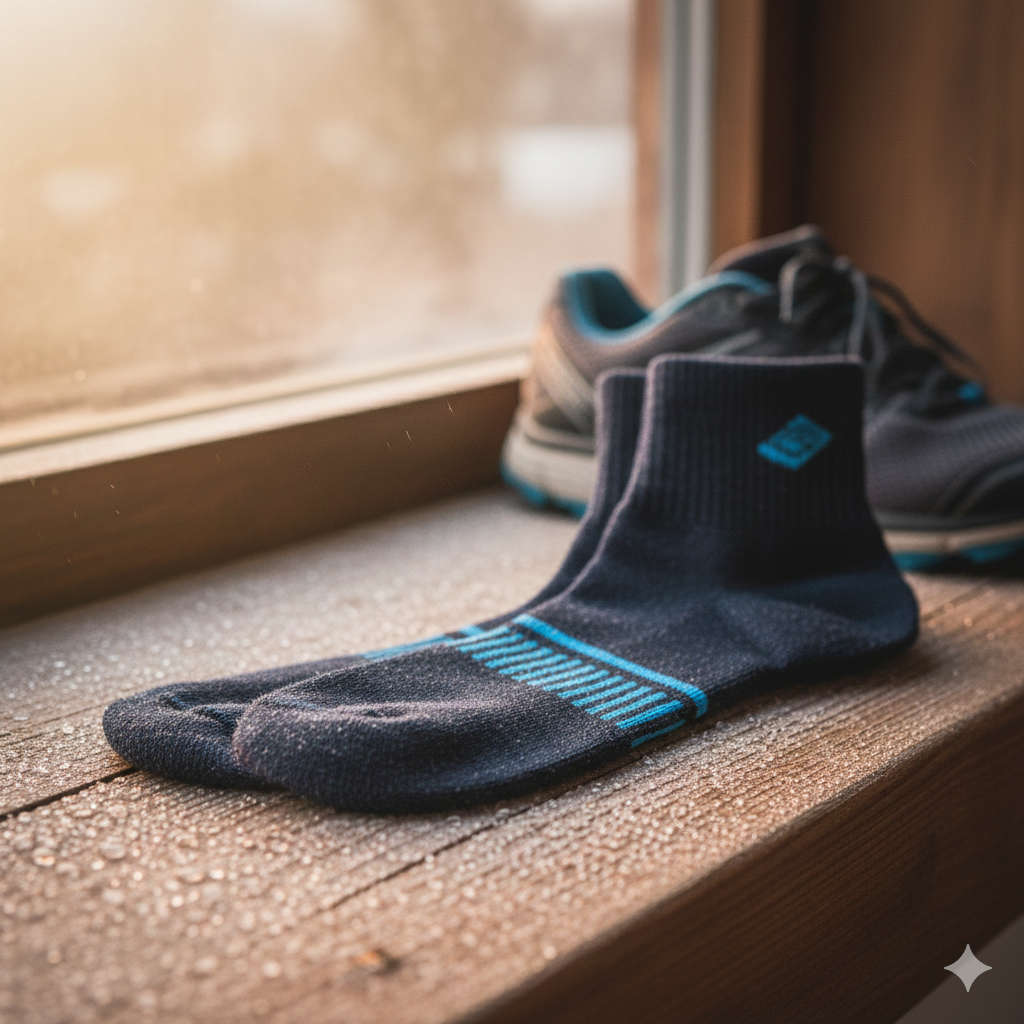
,If you’ve ever finished a winter run with frozen toes or discovered a blister from damp socks, you’ll know that choosing the right running socks matters just as much as picking the right trainers. Yet most of us spend hours researching shoes and jackets while grabbing whatever socks are on sale.
I spent three winters testing different sock materials before discovering merino wool. The difference was immediate and obvious—no more numb toes, no more soggy cotton clinging to my feet, and remarkably, far fewer blisters even on 15-mile Sunday runs.
This guide covers everything you need to know about merino wool running socks for British winter conditions, including specific recommendations that actually work.
Why Merino Wool Works for Winter Running
Merino wool comes from Merino sheep and feels completely different from scratchy wool jumpers. The fibres are incredibly fine, creating soft fabric that performs brilliantly for running.
It Keeps You Warm Without Overheating
Merino creates tiny air pockets that trap warmth when you’re cold but remains breathable when you’re working hard. Your feet stay comfortable whether you’re starting on a freezing morning or pushing hard up a hill after warming up.
It Handles Sweat and Rain
The fibres absorb up to 30% of their weight in moisture before feeling wet. They pull sweat away from your skin whilst still insulating, even when damp. This matters enormously when your feet deal with both sweat and external wetness from puddles or rain.
It Stays Fresh Longer
Merino naturally resists bacteria, so your socks stay fresher between washes. Most runners can wear them two or three times before washing, which actually extends their life by reducing washing frequency.
It Prevents Blisters
The smooth fibres create less friction than synthetic materials, significantly reducing hot spots and blisters during longer runs.
Most quality running socks blend merino with nylon or polyester. This combination gives you wool’s benefits plus better durability and structure.
What to Look for When Buying
Merino Content
Look for 50-70% merino wool. Higher percentages offer better temperature control and comfort but take longer to dry. The synthetic blend adds durability and helps socks keep their shape.
Cushioning Level
This depends on personal preference:
- Light cushioning suits road runners who want ground feel
- Medium cushioning works for most training runs
- Heavy cushioning benefits trail runners and those with foot pain
For winter, slightly more cushioning often feels better as it adds warmth.
Sock Height
Quarter-crew (covering ankle bone) works well under tights with no skin gaps. Crew-length (mid-calf) provides extra warmth around your Achilles. Mini-crew splits the difference.
Construction Features
Seamless toes prevent irritation. Reinforced heels and toes last longer. Arch support keeps socks positioned properly. Mesh zones allow heat to escape without sacrificing warmth.
Best Merino Running Socks Reviewed
After testing dozens of pairs through multiple UK winters, these stand out.
1. Darn Tough Run Quarter Lightweight
Best Overall Choice | £20-25
These American-made socks have earned their reputation. The lightweight construction feels cushioned without being hot, and they never slip during runs. The merino blend (around 64% merino with nylon) handles British winter’s changing conditions brilliantly.
Darn Tough offers an unconditional lifetime guarantee—if they wear out, they’ll replace them. The fit is precise, the durability exceptional, and they’re genuinely comfortable for everything from 5K efforts to marathon training.
Best for: Road runners wanting reliable all-conditions performance
2. Smartwool PhD Run Light Elite
Premium Performance | £18-22
The high merino content provides superb comfort for long runs. These excel at moisture management and stay fresh through multiple sessions. The targeted cushioning and anatomical arch support make them ideal for half and full marathon training.
They incorporate Smartwool’s Indestructawool technology for enhanced durability where your foot strikes hardest.
Best for: Distance training and marathon preparation
3. Icebreaker Run+ Ultralight Crew
Temperature Versatility | £16-20
These adapt brilliantly to changing conditions—perfect for unpredictable British weather. The ultralight merino blend balances warmth with breathability exceptionally well. A reflective stripe enhances visibility during dark mornings or evenings.
They dry faster than you’d expect for socks with this much merino content.
Best for: Runners facing variable temperatures throughout their run
4. Bridgedale Trail Run Lightweight
Trail Specialist | £17-21
These three-quarter crew socks handle technical terrain brilliantly. The merino is genuinely durable through extended trail miles. The Y-heel design and flat toe seam prevent blisters on uneven ground.
One caveat: once thoroughly soaked from deep puddles, they stay wet. They’re better for cold but dry conditions than typical British soggy weather.
Best for: Trail and fell runners in drier conditions
5. Runderwear Merino Performance
British Brand Excellence | £14-18
This UK company specialises in preventing chafing, and their merino socks deliver exceptional blister protection. Strategic cushioning zones provide security where your foot needs it most.
Many runners with blister-prone feet swear by these. Supporting a British brand that understands our weather is a bonus.
Best for: Runners who struggle with blisters
6. Inov-8 Merino Low
Minimalist Option | £12-16
These lightweight, low-cut socks feature channelled cushioning that protects against shoe pressure whilst maintaining breathability. Natural merino properties provide adequate warmth without bulk.
They’re versatile enough for gym work and transitional seasons, not just winter running.
Best for: Minimalist runners and cross-training
7. Hilly Supreme Quarter
Budget-Friendly Quality | £12-15
These British-designed socks deliver impressive performance at accessible prices. The merino blend provides good temperature regulation and moisture management. They represent excellent value for building your sock rotation without massive investment.
The fit runs true to size with secure ankle cuffs.
Best for: Budget-conscious runners starting their merino collection
8. Swiftwick Flite XT Trail Quarter
Ankle Protection | £17-20
Designed for trail running, these blend merino with olefin fibres for enhanced wicking. They fit snugly, feel soft, and breathe exceptionally well. The quarter-crew height provides ankle protection without excessive warmth.
Performance across varying temperatures impresses—comfortable from near-freezing starts to surprisingly mild finishes.
Best for: Trail runners wanting ankle support
9. Patagonia Merino Run Ankle
Sustainable Choice | £18-25
Patagonia’s environmental commitment extends to their sock range. These perform admirably whilst meeting strict sustainability standards. The form-fitting design eliminates bunching.
Perfect for environmentally conscious runners seeking performance without compromise.
Best for: Eco-conscious runners
10. 1000 Mile Trainer Liner
Blister Prevention Specialist | £15-18
These innovative double-layer socks deserve mention for exceptional blister prevention. The inner layer wicks moisture whilst the outer provides cushioning. The layers move independently, eliminating friction against your skin.
Particularly valuable for runners consistently battling blisters despite trying various single-layer options.
Best for: Severe blister sufferers
Handling Wet Weather
British winter running often means wet running. Rain, puddles, and morning dew are simply part of the experience.
The Wet Feet Reality
Quality merino performs remarkably well when damp, continuing to insulate effectively. However, in thoroughly saturated conditions—ankle-deep puddles or sustained downpours—even premium merino eventually becomes waterlogged.
Two approaches work:
Embrace it. Quality merino keeps feet reasonably warm even when soaked. Many experienced runners find this preferable to reduced breathability from waterproof alternatives.
Go waterproof. Brands like Sealskinz use membrane technology creating barriers against external moisture. They’re less breathable, so reserve them for genuinely miserable days.
Temperature Swings
British winter temperatures can shift dramatically within single runs. Merino’s temperature regulation handles this brilliantly, providing insulation when cold whilst releasing heat as you warm up.
This adaptability proves particularly valuable during longer runs where conditions inevitably change.
Making Your Socks Last
Quality merino socks represent real investment, so proper care matters.
Washing
Wash in cold water on gentle cycles. Hot water causes shrinkage and damages elastic fibres. Turn inside-out before washing to reduce pilling. Use mild detergent without bleach or fabric softeners.
Don’t wash after every run. Natural antimicrobial properties mean they can handle two or three wears, which actually extends their lifespan.
Drying
Air dry by laying flat or hanging away from heat sources. If machine drying, use the lowest setting. Never hang on radiators or near fires—intense heat damages fibres and distorts fit.
Rotation
Rotate between multiple pairs rather than using the same ones repeatedly. This allows each pair to fully dry between runs, significantly extending overall lifespan. Most serious runners keep three to five pairs in rotation.
Common Questions
How many pairs do I need?
Three to four pairs work for most training schedules, ensuring you always have dry socks available.
Can I wear merino in warmer weather?
Yes. Merino’s temperature regulation works both ways. Lightweight merino socks remain comfortable in surprisingly warm conditions. Many runners wear them year-round.
Do expensive socks make a real difference?
Generally yes. Higher-priced merino socks use finer wool, better construction, and more durable blends. They often last years, making cost-per-wear reasonable. That said, excellent mid-range options exist.
How should they fit?
Snugly without being tight. Follow sizing guides carefully. Merino has natural stretch and conforms to your foot shape.
Will they prevent all blisters?
No sock guarantees complete blister prevention, as multiple factors contribute. However, merino significantly reduces risk through better moisture management and reduced friction.
How long do they last?
With proper care, quality merino running socks typically last 500-1000 miles, sometimes more. Lifespan depends on running surface, washing frequency, and care practices.
Should I size up for winter?
No. Properly fitted merino socks don’t require seasonal sizing adjustments.
Starting Your Collection
Begin with two or three pairs suited to your typical running. Road runners might choose lighter options. Trail runners often prefer extra cushioning. Those facing frequent wet conditions might split between standard merino and waterproof alternatives.
Pay attention to what works for your feet specifically. Every runner responds differently to various sock constructions. Don’t hesitate to experiment until you find your perfect match.
Why This Matters
The difference quality merino wool socks make often surprises people. It’s not marginal comfort improvement—it’s genuinely transformative.
Your feet stay pleasantly warm from the first step. They remain comfortable as you warm up without transitioning to overheated and swampy. When you hit puddles or drizzle, they stay reasonably warm despite dampness. When you finish, there are no painful blisters or lingering cold sensation.
Quality socks impact your willingness to train consistently through winter. When running feels comfortable, you’re more likely to do it. And, blisters stop derailing training, you maintain consistency. When cold feet stop distracting you, you focus on actual running.
Final Thoughts
Winter running in Britain tests commitment. Weather challenges you, darkness limits training windows, and motivation naturally fluctuates. But with appropriate gear, winter training becomes genuinely enjoyable rather than just tolerable.
Quality merino wool running socks fundamentally transform winter running. They maintain comfort across varying temperatures, manage moisture effectively, prevent blisters, and simply make every mile more pleasant.
Your feet carry you through every mile of training. They deserve proper care and protection, especially during winter’s demanding months. Quality merino wool running socks aren’t accessories—they’re essential kit directly impacting your comfort, performance, and ability to train consistently.
Invest in two or three pairs initially. Test them through various conditions. Then expand your collection accordingly.
Winter running can genuinely be enjoyable. Proper socks make that transformation possible.
Here’s to comfortable winter miles with warm, dry, happy feet.