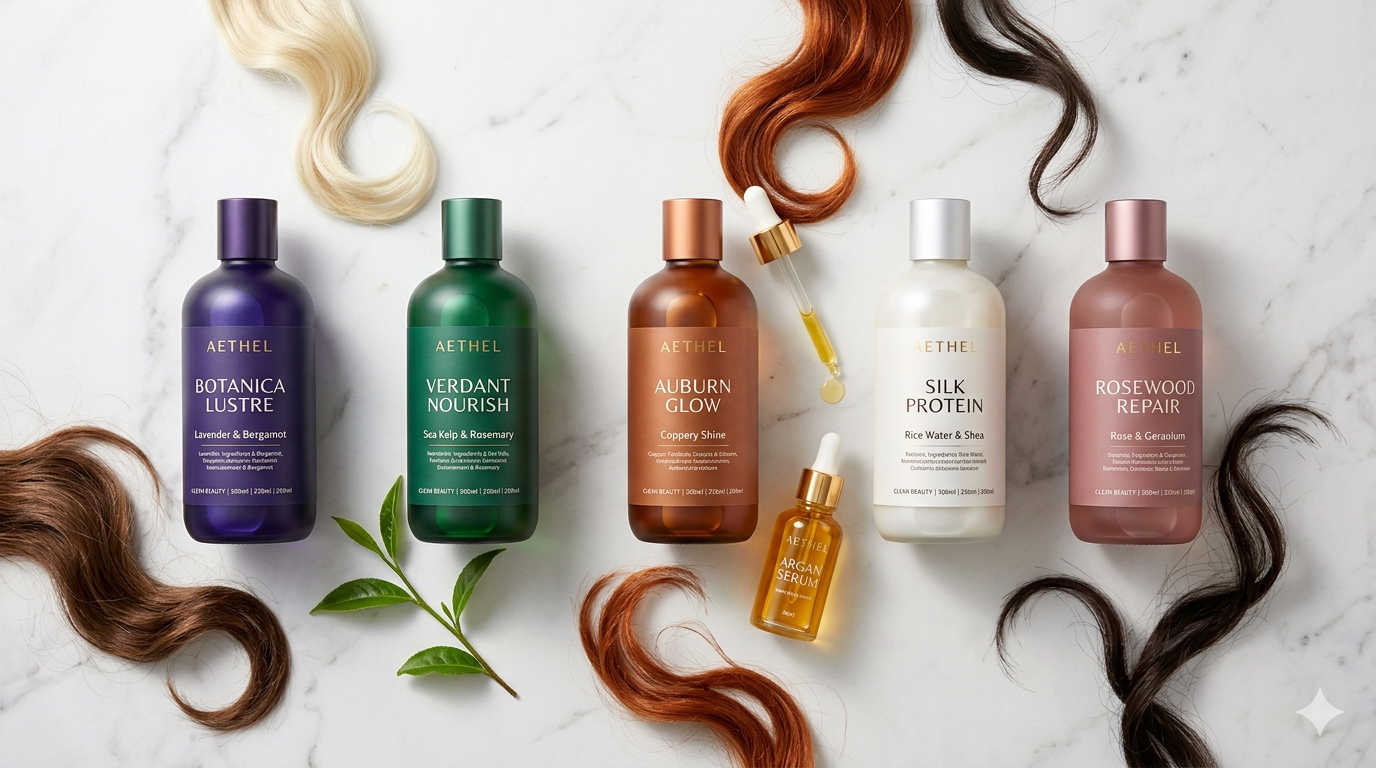
There is something deeply satisfying about leaving a salon with fresh, vibrant color. Whether you went for a sun-kissed balayage, a dramatic fashion shade, or a classic brunette gloss, that first-day result feels entirely worth the investment. Then comes wash day — and if you reach for the wrong bottle, that gorgeous color can start looking flat and washed out much sooner than it should.
Color-treated hair behaves very differently from hair in its natural state. When dye is applied, the chemical process forces the outer layer of each strand — the cuticle — to open so that pigment molecules can enter and bond inside the cortex. That same process leaves hair more porous, more fragile, and far more susceptible to losing color over time. A standard shampoo loaded with harsh detergents can pull significant pigment out with every wash, turning a fresh, vivid result into something dull and faded in just a couple of weeks.
For people who invest in professional color, this is not a minor frustration. Choosing the right shampoo for color-treated hair is one of the simplest and most affordable things you can do to extend the life of that investment — sometimes by several weeks.
This guide covers the ten best shampoos for color-treated hair in 2026, explains exactly what makes a shampoo genuinely color-protective, walks through the ingredients worth seeking out and those worth avoiding, and offers practical day-to-day advice for keeping your color looking its best between appointments.
Why Ordinary Shampoos Strip Color So Effectively
Understanding the chemistry behind color fade makes it much easier to see why switching shampoos matters so much.
Most mainstream shampoos are built around sulfate-based detergents — the two most common being sodium lauryl sulfate and sodium laureth sulfate. These compounds are designed to cut through oil, grease, and product buildup quickly and efficiently. They accomplish that goal very well. The problem is that they are not remotely selective in what they remove. Along with dirt and excess sebum, they also penetrate the already-raised hair cuticle and pull dye molecules out of the cortex where color is stored.
Beyond stripping color directly, sulfates remove the natural lipid coating that protects the outside of each strand. Those lipids act as a protective seal. Once they are depleted, the cuticle sits rough and open, moisture escapes more easily, and hair looks dull even when color would otherwise be intact. For chemically processed hair that is already in a structurally weakened state, repeated exposure to sulfate-heavy formulas compounds that damage at a visible rate.
There is also a pH dimension to consider. Tap water and most conventional shampoos have a higher pH than the hair’s natural surface, which sits around 4.5 to 5.5. Washing repeatedly with alkaline formulas keeps the cuticle in a slightly raised, rough state rather than lying flat and smooth — which is precisely the condition that makes dye molecules most vulnerable to escaping.
Color-protective shampoos address these issues by replacing harsh surfactants with milder alternatives that clean the hair and scalp without aggressively disrupting the cuticle. They also typically include conditioning agents, antioxidants, proteins, and sometimes UV-filtering compounds that provide active protection rather than just passive gentleness.
What to Look for in a Color-Safe Shampoo
Reading a shampoo label can feel overwhelming, but once you know which ingredients are doing useful work, the process becomes much more straightforward.
Gentle surfactants form the foundation of any effective color-care formula. Cocamidopropyl betaine, sodium cocoyl isethionate, and sodium lauroyl methyl isethionate are among the most widely used mild cleansing agents. They produce a lighter lather than sulfates but clean just as effectively for normal scalp oiliness — and they leave the cuticle significantly less disturbed after rinsing.
Hydrolyzed proteins — keratin, wheat protein, silk amino acids — reinforce the structural integrity of hair that has been weakened by chemical processing. These smaller protein fragments can temporarily fill in gaps in the hair cortex, making each strand stronger, smoother, and better at retaining dye molecules between wash sessions.
Ceramides are lipid molecules naturally present in healthy hair that get depleted by coloring processes. When a shampoo contains ceramides, they help fill in microscopic gaps along the cuticle surface and seal it flat. A smooth, sealed cuticle reflects light more evenly — which is why color looks glossier and more vibrant when the cuticle is in good condition — and it also creates a physical barrier that slows pigment loss over time.
Antioxidants such as vitamin E, vitamin C, and green tea extract counteract oxidative stress caused by UV exposure and environmental pollution. Free radicals generated by these environmental factors degrade both the hair fiber itself and the dye molecules within it. Antioxidants in a shampoo formula help neutralize some of that ongoing damage.
UV filters like benzophenone-4 work similarly to sunscreen on skin. Sun exposure is one of the most underestimated causes of color fade, particularly for reds and darker brunettes. A formula with UV protection provides an important layer of defense for anyone who spends meaningful time outdoors.
Botanical oils — argan oil, rosehip oil, jojoba, aloe vera — add moisture, reduce frizz, and improve overall manageability without interfering with color. They are especially valuable in formulas aimed at dry or coarse hair types that need heavier conditioning alongside color protection.
Ingredients That Work Against Your Color
Knowing what to avoid is just as important as knowing what to seek out.
Sodium lauryl sulfate and sodium laureth sulfate are the primary culprits behind premature color fade. Even in relatively small concentrations, they are aggressive enough to leach dye molecules from chemically processed hair with regularity. Any shampoo containing either of these does not belong in a color-care routine, regardless of what else the label claims.
Drying alcohols — SD alcohol, denatured alcohol, isopropyl alcohol — appear in some volumizing and clarifying formulas. They are intensely stripping and particularly harmful to the already fragile structure of color-treated strands. It is worth noting that fatty alcohols like cetyl alcohol and stearyl alcohol are entirely different compounds that actually condition hair, so look specifically for the short-chain varieties before avoiding a formula.
Alkaline pH formulas keep the cuticle in an open state that accelerates dye loss. A well-formulated color shampoo should sit between pH 4.5 and 5.5. Many brands do not disclose pH values on packaging, but inexpensive pH test strips make it easy to check at home if you want to be thorough.
Formaldehyde-releasing preservatives such as DMDM hydantoin and quaternium-15 can weaken the hair’s protein structure with prolonged use, making it progressively harder for the fiber to hold onto color. They are worth avoiding outside of a color-care context as well.
Heavy silicone buildup — primarily from dimethicone used repeatedly without a clarifying wash — can create a coating on the hair shaft that interferes with the evenness of future dye applications. If you color your hair regularly and never clarify, silicone accumulation is worth monitoring.
The 10 Best Shampoos for Color-Treated Hair in 2026
1. Pureology Hydrate Sheer Shampoo — Best Overall for Fine, Color-Treated Hair
Pureology has spent decades building a reputation as one of the most trusted names in professional color care, and the Hydrate Sheer formula justifies that reputation consistently. What sets it apart for fine and medium hair is the balance it achieves between genuine hydration and a formula light enough not to flatten delicate strands — a combination that proves surprisingly difficult to get right.
The shampoo is built on sulfate-free surfactants and enriched with hyaluronic acid, jojoba oil, and green tea extract. Hyaluronic acid draws moisture into the hair shaft and holds it there, which matters enormously for dyed hair that tends toward dryness. Green tea delivers antioxidant activity that fights oxidative color degradation, while jojoba mimics the natural oils that protect the hair surface and conditions without leaving any residue.
Fine hair wearers will particularly appreciate that this formula rinses completely clean. There is no heaviness or buildup that causes strands to feel limp or greasy by afternoon, which is a common complaint with richer color-care formulas that are genuinely designed for thicker hair types.
Best for: Fine to medium, color-treated hair needing moisture without weight Key ingredients: Hyaluronic acid, jojoba oil, green tea extract Formula: Sulfate-free, 100% vegan
2. Redken Color Extend Magnetics Shampoo — Best for Vivid and Bold Hair Color
Vivid hair colors — electric blues, bright reds, deep purples, vivid pinks — are among the most difficult shades to maintain. The dye molecules responsible for those intense tones tend to be smaller and more water-soluble than other pigment types, meaning they begin migrating out of the hair shaft almost immediately after a coloring service. If you have invested in a statement shade, you need a shampoo designed with that specific challenge in mind.
Redken’s Color Extend Magnetics formula approaches this with a system that attracts and deposits color-enhancing proteins directly onto the hair fiber, reinforcing the surface layer around where pigment molecules sit. The effect is a strengthening and sealing action that keeps color looking more vivid and hair feeling more resilient with each use.
The formula is gentle enough for daily use, which matters for people with vivid colors who may need to wash more frequently due to other lifestyle factors. The amino acid content supports structural repair alongside the color-protective work, and the sulfate-free base ensures cleansing does not undo the color-retention benefits.
Best for: All hair types, especially vivid, fashion, and statement color Key ingredients: Amino acids, color-enhancing protein system Formula: Sulfate-free
3. Wella Professionals INVIGO Color Brilliance Shampoo — Best for Thick, Coarse Hair
Thick and coarse hair is a hair type that most color-care formulas underserve. The majority of products in this category are designed with fine or medium hair in mind, leaving people with denser, more textured strands without the level of moisture or color protection their hair actually requires. Wella’s INVIGO Color Brilliance shampoo addresses this directly, and the difference is noticeable.
The formula incorporates a lime caviar complex alongside vitamin E to neutralize the free radicals that cause color to look dull and flat between appointments. Thick hair has a proportionally larger surface area and tends to be more exposed to environmental stressors, so the antioxidant activity here is especially beneficial. The protective mechanism the formula builds around each strand reduces the hair’s overall porosity, which directly slows the rate at which color molecules escape with each wash.
For coarse hair that consistently looks dry and dull regardless of how recently it was colored, this shampoo delivers a glossy, polished result that makes color appear more intentional and salon-fresh.
Best for: Thick, coarse, high-density color-treated hair Key ingredients: Vitamin E, lime caviar complex Formula: Professional-grade, sulfate-free
4. Joico Color Balance Blue Shampoo — Best for Brunettes Fighting Brassiness
Brunette and dark blonde color wearers deal with a specific and genuinely frustrating problem: brassiness. As hair dye oxidizes in the weeks following a salon appointment, underlying warm pigments that were masked by the dye begin to surface. The result is an unwanted orange or reddish-brown cast that makes hair look older and less vibrant even though no significant time has passed.
The solution is grounded in color theory. Blue sits directly opposite orange on the color wheel, which means blue pigment neutralizes orange tones on contact. Joico’s Color Balance Blue Shampoo deposits a controlled amount of blue pigment with each wash, progressively counteracting that warm buildup and restoring the cooler, richer tone that a professional brunette color service should maintain.
What keeps this from being a narrow one-purpose product is the repair technology the formula also contains. A blend of rose hip oil, arginine, and keratin is delivered to the hair alongside the toning action, providing genuine conditioning and structural support. For hair that has been through repeated color services, that combination of toning and repair is more valuable than either benefit alone.
Best for: Brunette, dark blonde, chestnut color-treated hair with warm or orange undertones Key ingredients: Blue pigment complex, rose hip oil, arginine, keratin Formula: Sulfate-free, toning
5. Olaplex No. 4 Bond Maintenance Shampoo — Best for Damaged, Over-Processed Hair
When hair has been bleached, highlighted, and colored repeatedly over time, the structural damage compounds. The internal bonds holding the hair’s protein chains together — disulfide bonds — break down progressively under repeated chemical exposure. Once enough of them are compromised, hair loses its elasticity and strength, begins to feel gummy or brittle, and becomes genuinely difficult to color effectively because the damaged fiber cannot hold onto dye molecules the way healthy hair can.
Olaplex’s bond-building chemistry targets this problem directly. Rather than simply conditioning the surface of the hair, the active compound in the system seeks out broken disulfide bonds inside the cortex and helps reconnect them. The No. 4 shampoo delivers this same chemistry in a wash-in format, meaning each cleansing session performs some degree of internal repair.
The practical outcome, with consistent use over several weeks, is hair that becomes progressively stronger and healthier at a structural level. Healthier hair holds color better — not because of any surface coating, but because an intact fiber simply does not allow dye molecules to escape as readily. For anyone dealing with breakage, elasticity loss, or color that fades within days of application, this is the logical place to start rebuilding.
Best for: Severely damaged, over-processed, or repeatedly bleached color-treated hair Key ingredients: Patented bond-building compound (bis-aminopropyl diglycol dimaleate) Formula: Sulfate-free, bond-repairing
6. Living Proof Color Care Shampoo — Best for Clinically Backed Color Longevity
Living Proof has always approached hair care from a research-first perspective, and their Color Care Shampoo reflects that philosophy in the form of an exclusive molecule called EVERCAP. This compound forms a thin protective barrier around each individual hair strand that physically slows the migration of color molecules out of the fiber during washing — an approach that is meaningfully different from the conditioning-based protection most color shampoos rely on.
For people who feel frustrated watching salon color fade despite spending money on quality products, that mechanistic protection translates into a real and visible difference. The formula is clean in composition — sulfate-free, paraben-free, and phthalate-free — and the conditioning agents it contains leave hair polished and manageable without the weighted, coated feeling that heavier formulas can produce.
It performs consistently across all hair types and color services, making it a versatile default for someone uncertain where to begin or who wants one reliable formula that works regardless of their specific coloring technique.
Best for: All color-treated hair types seeking clinically verified color longevity Key ingredients: EVERCAP proprietary molecule, lightweight conditioning agents Formula: Sulfate-free, paraben-free, phthalate-free
7. Moroccanoil Color Care Shampoo — Best for Dry, Color-Treated Hair
When colored hair is significantly dry — rough to the touch, frizzy, losing softness within a day of washing — a standard color-protection formula often does not go nearly far enough. The Moroccanoil Color Care Shampoo was designed for exactly this combination of challenges: hair that needs both active color preservation and deep, lasting hydration provided simultaneously.
The standout ingredient is argan oil, which Moroccanoil has built its entire brand philosophy around. This oil is rich in fatty acids and vitamin E and is capable of genuinely penetrating the hair shaft rather than simply sitting on the surface, delivering real moisture to the places inside the fiber where dryness originates. The keratin component supports structural repair, and a UV filter provides protection for color exposed to outdoor light.
The experience of using this shampoo is also genuinely pleasant. The lather is rich and satisfying, and the fragrance is recognizable and appealing without being overwhelming. For people who find wash day a chore, a formula this enjoyable to use makes it easier to build and maintain a consistent routine — which, over time, is what color longevity actually requires.
Best for: Dry to very dry, color-treated hair requiring deep moisture Key ingredients: Argan oil, keratin, UV filter Formula: Sulfate-free, silicone-free
8. Verb Color Kick Shampoo — Best Budget Option
Quality color care does not need to be expensive. Verb Color Kick Shampoo delivers real performance at a price point that makes maintaining a consistent routine financially sustainable for most people, without requiring any compromises in the core function of protecting color.
The formula is sulfate-free and vegan, built around quinoa protein as its primary functional ingredient. Quinoa is a complete protein containing all essential amino acids, which makes it unusually effective at binding to and reinforcing hair that has been weakened by chemical processing. Meadowfoam seed oil — a lightweight, stable oil with excellent moisture-retention properties — provides conditioning alongside the protein work.
What Verb does not offer is the specialized technology of Olaplex’s bond-building system or the proprietary molecular protection of Living Proof. For hair in reasonable condition that simply needs reliable daily color maintenance, however, it performs consistently well. At this price, using it more generously or more frequently than a premium option is an entirely reasonable decision.
Best for: All color-treated hair types; budget-conscious buyers Key ingredients: Quinoa protein, meadowfoam seed oil Formula: Sulfate-free, vegan
9. Aveda Color Conserve Shampoo — Best for Eco-Conscious Buyers
For buyers who factor environmental responsibility into their purchasing decisions alongside performance, Aveda Color Conserve Shampoo is the most thoughtfully constructed option on this list. The formula is composed almost entirely of naturally derived ingredients — certified organic lavender and rosemary among them — and it protects color from both wash-related fade and UV exposure without relying heavily on synthetic chemistry.
Aveda’s broader commitments go beyond what is inside the bottle. Packaging uses post-consumer recycled materials, manufacturing operations run on renewable energy, and the company holds B Corporation certification — a rigorous independent standard for social and environmental performance. None of that changes what the shampoo does on your hair, but for buyers who care about these factors, it makes Aveda the clear choice in its category.
In terms of pure hair performance, it cleanses gently, controls frizz reasonably well, and leaves hair with a natural, uncoated feel that works particularly well for those who do not enjoy heavy or glossy finishes. The botanical fragrance is soft and grounded — a quiet blend of lavender and rosemary that fades quickly rather than lingering.
Best for: Normal to dry, color-treated hair; environmentally conscious shoppers Key ingredients: Certified organic lavender, rosemary, UV filters Formula: Sulfate-free, silicone-free, vegan, cruelty-free
10. Schwarzkopf Professional BC Bonacure Color Freeze Shampoo — Best for Bleached and Highlighted Hair
Bleached and highlighted hair presents a distinct set of challenges. The lightening process removes natural pigment and leaves the hair shaft in a highly porous state — structurally open, moisture-depleted, and prone to absorbing environmental minerals while releasing applied color rapidly. Standard color-care formulas help with this to a degree, but the BC Bonacure Color Freeze shampoo addresses it through a specific mechanism that sets it apart from most alternatives.
The formula uses pH-controlled chemistry that closes the hair cuticle more completely during and after cleansing than a standard wash would achieve. When the cuticle is sealed tightly, color molecules have fewer escape routes, and the hair surface is smoother and more reflective. For bleached and highlighted hair specifically, this also counteracts the roughness and oxidative dullness that tends to develop quickly between salon appointments.
Hydrolyzed wheat protein and panthenol provide structural repair and moisture retention alongside the pH-balancing technology. Hairdressers regularly recommend this as a maintenance shampoo for clients immediately following lightening services, which is a strong endorsement from the professional context where its performance is most observable.
Best for: Bleached, highlighted, and lightened color-treated hair Key ingredients: Hydrolyzed wheat protein, panthenol, pH-balancing technology Formula: Sulfate-free, professional-grade
Choosing Your Shampoo by Hair Color Type
Color-treated hair is not a single uniform category. Your specific shade and coloring technique determine what a shampoo needs to accomplish beyond basic protection.
Blonde, platinum, and silver hair is most susceptible to yellow and brassy tones that develop as the cool pigment in a blonde service oxidizes over time. Violet or purple-toned shampoos work by depositing pigment that sits opposite yellow on the color wheel, neutralizing the warmth and restoring the cool tone. The key is moderation — using a strongly pigmented purple shampoo too frequently on very pale blonde hair can temporarily shift it toward a lavender or grey cast.
Brunettes and dark blondes deal primarily with orange brassiness as their color ages. A blue-toned shampoo like the Joico option detailed above addresses this effectively when incorporated once or twice a week. Using it every wash session can be overwhelming for deeper brunette tones, so alternating with a standard color-safe formula tends to produce more balanced results.
Red hair color fades faster than almost any other shade. Red dye molecules are physically smaller than most other pigment types, which allows them to exit the hair shaft more readily with each wash. Red-specific shampoos often contain warm-toned conditioning pigments that refresh the depth and vibrancy of the color between appointments more effectively than a generic color-safe formula can manage on its own.
Vivid and fantasy shades — pastels, neons, unconventional colors — require the most aggressive color protection on this list combined with reduced wash frequency. Color-depositing shampoos matched to the specific shade can also help by adding a small refresh of pigment at every wash.
Balayage and highlights blend natural and color-treated sections on the same head, which means you need a formula gentle and lightweight enough to work across both. Heavier moisturizing formulas designed for very dry or coarse hair can cause buildup on the uncolored sections, so a lighter-weight color-safe option tends to serve the overall blend better.
Practical Habits That Extend Color Life Significantly
The right shampoo matters, but how and when you use it shapes outcomes just as much as the formula itself.
Rinsing with cooler water makes a real and measurable difference. Heat is one of the most overlooked accelerants of color fade. Hot water swells the hair cuticle open, allowing dye molecules to escape more freely during rinsing. Finishing with a noticeably cooler rinse helps close the cuticle back down and produces a visibly glossier result — a small habit with a meaningful payoff.
Washing less frequently is one of the single most effective things you can do. Most people wash more often than their hair actually requires, and each session removes some amount of pigment regardless of formula quality. Two to three washes per week is sufficient for most scalp types. A quality dry shampoo handles the days in between without any contact with water, which is where color loss happens.
Waiting at least 48 hours after a coloring service before the first wash gives pigment molecules time to fully oxidize and settle inside the cortex. Washing too soon removes color that has not yet fully set, and it is one of the most common reasons people notice disappointing fade after just one or two shampoos.
Always following shampoo with a color-safe conditioner matters more than people often realize. Shampoo necessarily opens the cuticle slightly during cleansing. A conditioner applied immediately afterward seals it back down, trapping remaining color molecules and restoring the smooth surface that makes dye look rich and glossy rather than flat and faded.
A weekly deep conditioning treatment replenishes the moisture that chemical processing depletes and strengthens the overall fiber structure, making hair more resistant to ongoing damage and better at holding onto color over time.
UV exposure deserves more attention than it typically gets. Sunlight degrades dye molecules through photochemical reactions that occur continuously, even between wash sessions. A leave-in product that includes UV protection, or simply a hat on particularly sunny days, provides meaningful defense for color that would otherwise be quietly fading outdoors.
Frequently Asked Questions About Color-Treated Hair Shampoos
How often should I shampoo color-treated hair? Two to three times per week is the widely recommended frequency for most color-treated hair. Daily washing — even with gentle, color-safe formulas — contributes to cumulative pigment loss because each cleansing session removes some dye regardless of how mild the surfactants are. On non-wash days, dry shampoo applied at the roots keeps hair feeling fresh without any water exposure at the fiber.
Can I use a color-safe shampoo on hair that has not been colored? Yes, without any concern. Color-safe shampoos are milder formulas with added conditioning and protective ingredients. They will not alter natural hair color, cause buildup, or produce any negative effects on uncolored hair. People with sensitive scalps or fine hair who prefer a gentler cleanse often find color-safe formulas more suitable than standard shampoos regardless of whether their hair is dyed.
Is sulfate-free always the same thing as color-safe? Not necessarily. Sulfate-free means the formula omits sodium lauryl sulfate and sodium laureth sulfate, which is a fundamental requirement for color safety. But a shampoo can be sulfate-free without including antioxidants, UV filters, ceramides, or conditioning proteins — ingredients that make a formula genuinely effective at preserving color. The best approach is to look for a product that is both sulfate-free and explicitly formulated for color-treated hair.
How quickly will I notice a difference after switching to a color-safe shampoo? Most people notice improved color vibrancy and surface shine within two to four washes. The structural repair benefits from bond-building formulas like Olaplex build progressively over several weeks of consistent use, which requires more patience but ultimately produces more dramatic changes in hair health.
Do I need to use the matching conditioner from the same brand? Using a paired system can optimize results, but it is not a hard requirement. What matters most is that both your shampoo and conditioner are designed for color-treated hair and do not contain ingredients that counteract each other. Mixing compatible products from different brands works perfectly well in practice.
What is the difference between a color-safe shampoo and a color-depositing shampoo? A color-safe shampoo protects the color already in your hair from fading during cleansing. A color-depositing shampoo does that while also introducing a small amount of fresh pigment — either to neutralize brassiness or to refresh a fading tone — with each wash. Some products combine both functions. Which type is most useful depends on whether you are preserving your current result or actively trying to refresh or tone it.
Why does red hair color fade faster than other shades? Red pigment molecules are structurally smaller than most other dye types, which allows them to move through the hair cuticle more easily during each wash. The coloring process used for red shades also typically requires a more alkaline chemical environment, which leaves the cuticle in a more open state following application. These two factors combined make red the fastest-fading color category, which is why washing frequency, cold rinses, and red-specific formulas are particularly important for this shade group.
Should I use a clarifying shampoo if I color my hair? Clarifying shampoos are effective at removing mineral buildup, hard water deposits, and silicone accumulation, but they should be used sparingly on color-treated hair — no more than once a month and only when buildup is actually noticeable. After any clarifying wash, following up with a deep conditioner is essential to restore moisture that the more powerful cleanse will have stripped.
Final Thoughts
Protecting your hair color does not require a complicated multi-step system or a large collection of products. It begins with one practical decision: replacing a generic shampoo with a formula built for how color-treated hair actually works.
Every product on this list delivers that protection differently. Some rely on advanced molecular technology, some on deep nourishment, some on toning pigments, and some on a combination of all three. The right choice depends on your hair type, your specific color service, and what your hair needs most right now.
The consistent thread across all of them is that they work with color-treated hair rather than against it. Milder cleansing agents, functional conditioning ingredients, and active protective compounds add up to color that looks fresher for longer, hair that feels progressively healthier, and far fewer disappointing moments in the mirror after a wash.
- If you are starting from scratch with no strong preference, match your choice to your hair type first.
- If your hair is structurally compromised, begin with bond repair.
- If brassiness is your primary complaint, start with a toning formula.
Give your chosen product four to six weeks of consistent use before evaluating its performance — good hair care, like most worthwhile habits, rewards patience and consistency over time.
Found a color shampoo that has made a genuine difference for your hair? Share your experience in the comments — practical recommendations from real users are often the most useful information in any buying decision.