A sensitive scalp can quietly dictate your entire haircare routine. When irritation, itching, or dryness show up, even the most basic shampoo can feel like the wrong choice. In the UK, where changing weather, hard water in some regions, and styling habits all play a role, finding the right shampoo becomes even more important.
Over the past few years, sulfate-free shampoos have moved from niche shelves to mainstream must-haves—and for good reason. They offer a gentler way to cleanse while supporting the scalp’s natural balance. But with so many options available in 2026, choosing the right one can feel confusing.
This complete guide is designed to simplify that decision. It combines practical advice, ingredient insights, and carefully selected product recommendations to help you build a routine that actually works—without trial-and-error frustration.
Understanding Sensitive Scalps: What’s Really Happening?
A sensitive scalp isn’t just a minor inconvenience. It’s often a sign that your skin barrier—the outermost protective layer—is weakened or compromised.
When your scalp is healthy, it naturally holds onto moisture and keeps irritants out. But when that barrier is disrupted, you may notice:
- Persistent itching
- Tightness after washing
- Redness or mild inflammation
- Flaky or dry patches
- Increased sensitivity to products
This can happen for several reasons. Environmental factors like cold winds or indoor heating, product buildup, stress, and even water quality can all contribute. But one of the most common triggers is using overly harsh cleansing products.
That’s where sulfate-free shampoos come in.
Why Sulfate-Free Shampoos Are Better for Sensitive Scalps
Traditional shampoos rely on sulfates—strong cleansing agents that create that familiar rich lather. While effective at removing oil and dirt, they can also strip away the scalp’s natural oils.
For someone with a resilient scalp, this may not cause major issues. But for sensitive skin, it can lead to irritation and dryness.
Sulfate-free shampoos take a different approach. They use milder surfactants that cleanse without disrupting the scalp’s natural barrier.
Key Benefits of Sulfate-Free Formulas
- Maintain natural moisture levels
- Reduce the risk of irritation
- Support long-term scalp health
- Suitable for frequent washing
- Ideal for colour-treated or damaged hair
The result is a more balanced, comfortable scalp over time—not just immediately after washing.
What to Look for in a Sulfate-Free Shampoo
Not all sulfate-free shampoos are equally gentle. Some replace sulfates with alternative cleansers that can still be harsh. Understanding ingredient labels helps you avoid that trap.
Gentle Cleansing Agents to Look For
- Cocamidopropyl betaine
- Sodium cocoyl isethionate
- Decyl glucoside
These ingredients are known for being effective yet mild, making them ideal for sensitive scalps.
Ingredients That Soothe and Repair the Scalp
The best shampoos don’t just avoid irritation—they actively improve scalp health.
Beneficial Ingredients
- Colloidal oatmeal: calms itching and reduces inflammation
- Niacinamide: strengthens the skin barrier and reduces redness
- Panthenol (Vitamin B5): hydrates and improves elasticity
- Aloe vera: provides cooling and soothing relief
- Ceramides: restore the protective barrier
Ingredients to Be Careful With
- Artificial fragrance
- Alcohol-heavy formulas
- Strong essential oils in high concentrations
- Harsh preservatives
A helpful tip: if your scalp feels tight or squeaky-clean after washing, the formula may be too stripping.
Best Sulfate-Free Shampoos for Sensitive Scalps in the UK (2026)
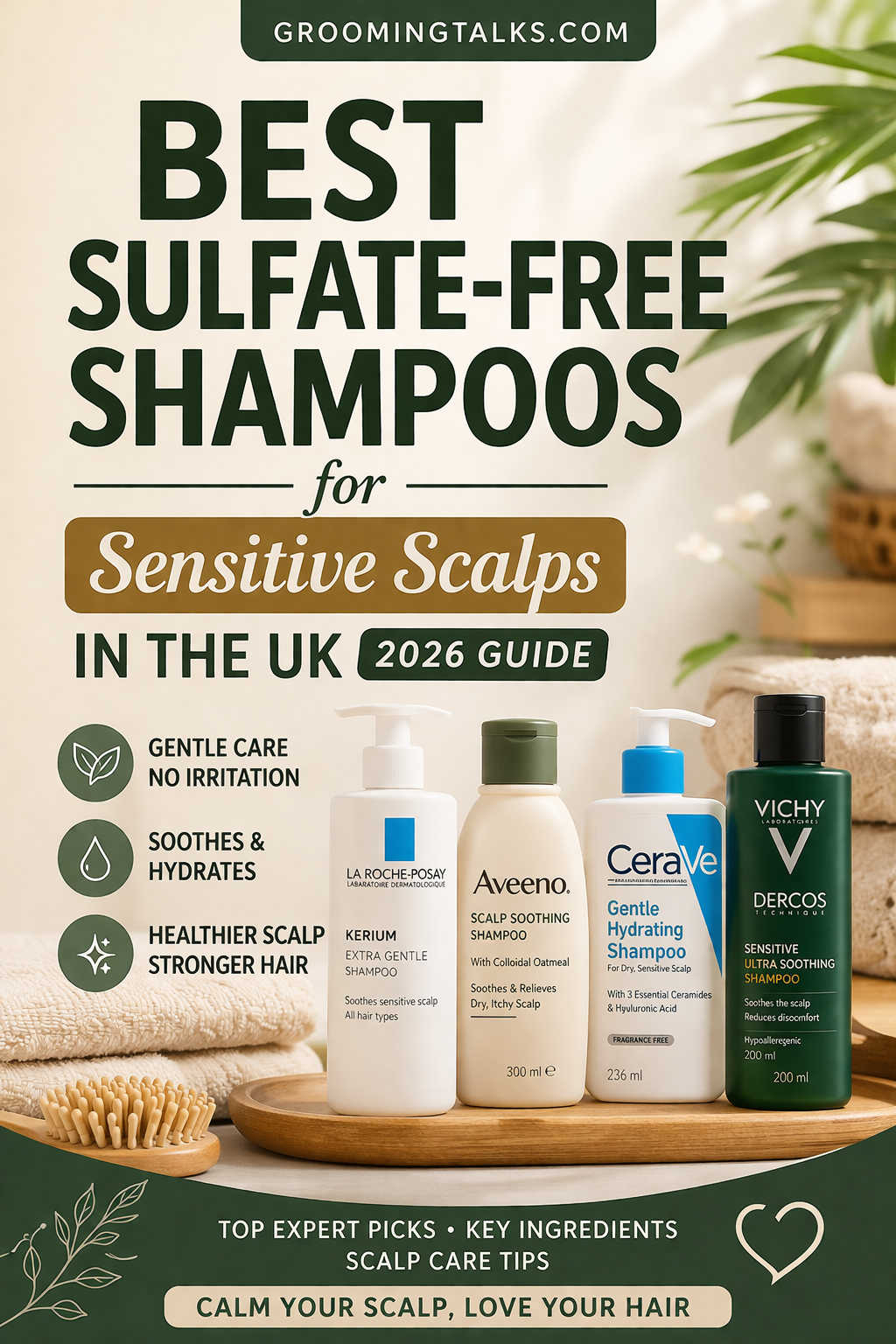
The UK market offers a wide range of sulfate-free shampoos, but only a handful consistently deliver both gentleness and performance. Below are some of the best options available right now.
La Roche-Posay Kerium Extra Gentle Shampoo
Best Overall for Sensitive Scalps
This shampoo is often recommended for people who struggle with ongoing irritation. Its formula is intentionally simple, focusing on reducing sensitivity rather than overloading the scalp with active ingredients.
It cleanses gently, doesn’t leave residue, and is suitable for regular use.
Best for: Reactive scalps and long-term sensitivity management
Aveeno Skin Relief Soothing Shampoo
Best Budget-Friendly Option
Aveeno’s oat-based approach works just as well for the scalp as it does for the skin. This shampoo provides a calming effect while still leaving hair soft and manageable.
It’s widely available across the UK and offers excellent value without compromising on quality.
Best for: Dry, itchy scalps and everyday use
CeraVe Gentle Hydrating Shampoo
Best for Repairing the Scalp Barrier
This shampoo focuses on rebuilding what your scalp has lost. With ceramides and hydrating ingredients, it supports long-term scalp health rather than offering just temporary relief.
It’s also fragrance-free, making it ideal for highly sensitive individuals.
Best for: Dry or damaged scalps needing restoration
Faith in Nature Fragrance-Free Shampoo
Best Natural Option
For those who prefer plant-based formulations, this is a reliable and accessible choice. It avoids common irritants while maintaining a simple, effective formula.
Its fragrance-free version is particularly suitable for sensitive scalps.
Best for: Mild sensitivity and eco-conscious routines
Eucerin DermoCapillaire Urea Mild Shampoo
Best for Very Dry or Flaky Scalps
This shampoo is designed for people who experience tightness and visible dryness. It uses urea to help retain moisture and improve scalp comfort.
It’s gentle enough for regular use and works well for persistent dryness.
Best for: Flaky or eczema-prone scalps
Vichy Dercos Sensitive Ultra Shampoo
Best for Instant Comfort
When your scalp feels irritated, this shampoo offers quick relief. Its lightweight formula soothes without weighing hair down.
Many users notice a calming effect after just a few uses.
Best for: Inflamed or irritated scalps
Olaplex No.4 Bond Maintenance Shampoo
Best Premium Choice
This shampoo is particularly popular among those with damaged or colour-treated hair. It repairs hair bonds while remaining gentle on the scalp.
Although more expensive, it offers noticeable improvements in hair strength and texture.
Best for: Chemically treated hair with sensitivity
Living Proof Perfect Hair Day Shampoo
Best for Urban Lifestyles
City living exposes hair to pollution and buildup, which can worsen scalp sensitivity. This shampoo gently cleans while helping maintain freshness.
It’s lightweight and suitable for frequent use.
Best for: Oily-sensitive scalps and pollution exposure
Aveeno Apple Cider Vinegar Blend Shampoo
Best for Balancing Oil and Sensitivity
This formula combines gentle exfoliation with soothing ingredients. It helps manage oil without causing dryness or irritation.
It’s a great option for people who struggle with both oiliness and sensitivity.
Best for: Combination scalps
How to Choose the Right Shampoo for Your Needs
Choosing the right product depends on understanding your scalp type rather than following trends.
Dry and Sensitive Scalp
Look for hydrating ingredients like ceramides and oats. Avoid anything that feels overly cleansing.
Oily but Sensitive Scalp
Choose lightweight formulas that balance oil without stripping.
Flaky Scalp
Focus on hydration first. Not all flakes are dandruff—many are caused by dryness.
Colour-Treated Hair
Use sulfate-free shampoos that protect both hair colour and scalp health.
Transitioning to Sulfate-Free Shampoo: What to Expect
Switching shampoos isn’t always instant. Your scalp may take time to adjust, especially if you’ve been using sulfate-based products for years.
During the transition:
- Your hair may feel different at first
- You may notice less foam
- Oil production may temporarily increase
This is normal. Within a few weeks, most people notice improved balance and comfort.
Common Mistakes That Can Worsen Scalp Sensitivity
Even with the right shampoo, certain habits can undermine your results.
- Washing hair too frequently
- Using hot water
- Applying too many styling products
- Scratching the scalp
- Changing products too often
Consistency and simplicity are key.
Building a Gentle Haircare Routine
A sulfate-free shampoo is just one part of a complete routine.
To support your scalp:
- Use a lightweight conditioner on the ends, not the roots
- Avoid heavy oils directly on the scalp
- Limit heat styling
- Keep your routine minimal and consistent
Healthy hair starts with a calm, balanced scalp.
Frequently Asked Questions (FAQs)
Are sulfate-free shampoos suitable for daily use?
Yes, most sulfate-free shampoos are gentle enough for regular use. However, washing frequency should still depend on your scalp type.
Do sulfate-free shampoos cause buildup?
Not usually. Modern formulas are designed to cleanse effectively. However, occasional clarifying may help if you use many styling products.
Can sulfate-free shampoos help with itching?
Yes, especially if the itching is caused by dryness or irritation. Look for soothing ingredients like oatmeal or aloe vera.
Why does my hair feel different after switching?
Sulfate-free shampoos don’t strip natural oils, so your hair may feel softer or heavier at first. This usually balances out over time.
Are expensive shampoos better?
Not always. Some affordable options perform just as well. The key is choosing the right formula for your scalp.
How long does it take to see results?
Most people notice improvements within 2–3 weeks, although it can vary depending on scalp condition.
Final Thoughts: Choosing What Works for You
The best sulfate-free shampoo isn’t necessarily the most expensive or the most popular—it’s the one that works consistently for your scalp.
In the UK’s evolving haircare landscape, there are now more high-quality options than ever. Whether you prefer pharmacy brands, natural formulas, or salon-quality products, you can find something that fits your needs.
The goal isn’t perfection—it’s balance. A calm, comfortable scalp leads to healthier, stronger hair over time.
If you approach your routine with patience and awareness, the right shampoo can make a noticeable difference—not just in how your hair looks, but in how your scalp feels every day.